From the files of a 40-year field investigator
The Insurance Investigator's Playbook
Tradecraft, war stories, and hard-won lessons in insurance fraud investigation.
Also on Audible · read a chapter first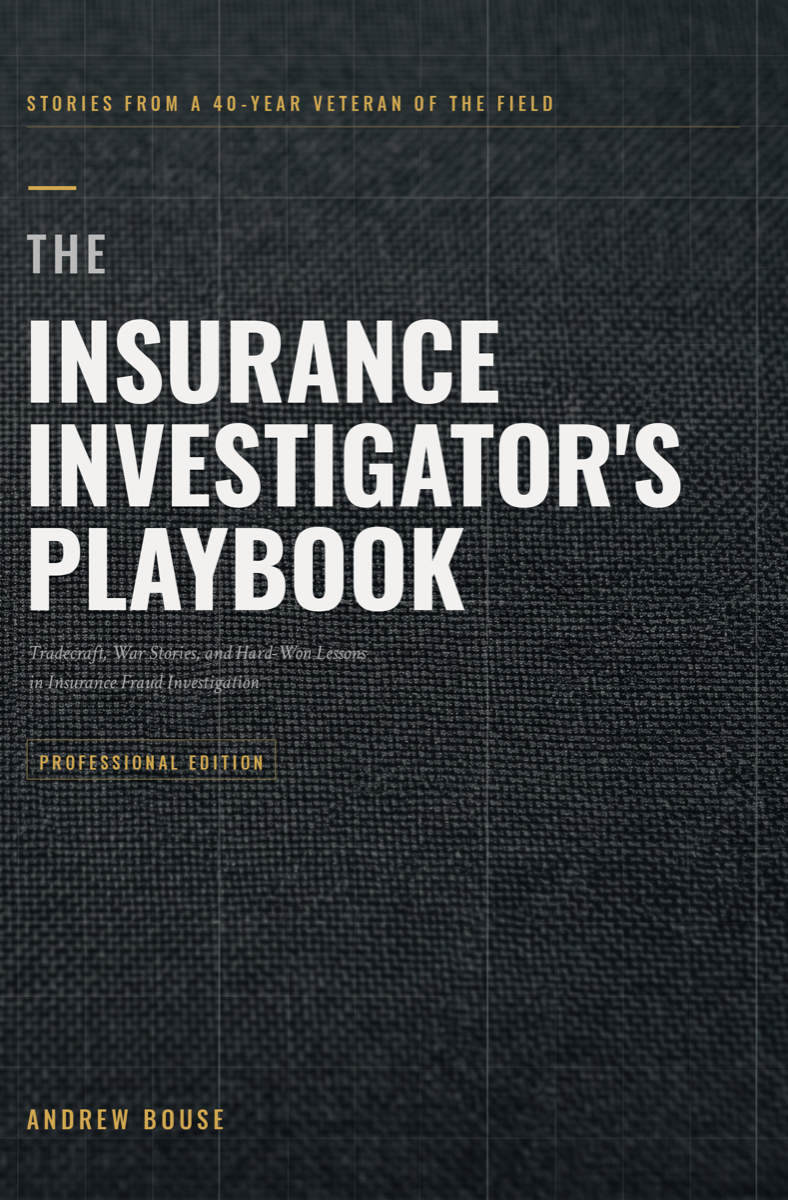
From the files of a 40-year field investigator
Tradecraft, war stories, and hard-won lessons in insurance fraud investigation.
Also on Audible · read a chapter first
If you work files, you know the feeling
The file says total disability. Something about it is wrong, and you cannot prove it. Nobody hands you a manual for that part — you are supposed to pick it up over twenty years, one mistake at a time.
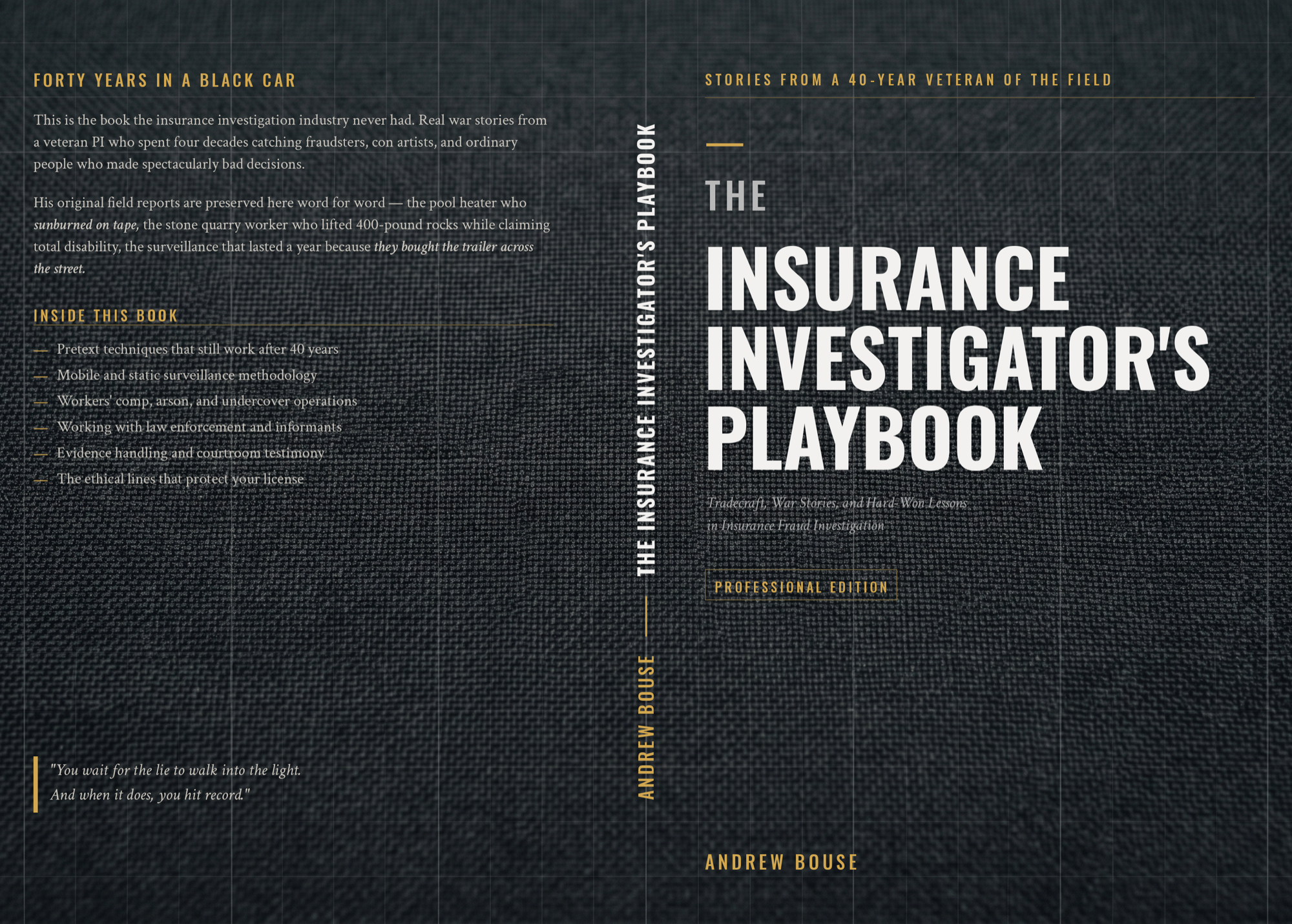
This is that manual, written by someone who spent forty years making the mistakes first. The original field reports are preserved word for word.
A claimant who said he could barely stand — sunburned on tape, installing a pool heater in his own back yard.
Total disability on the file. Forty-pound stones in the footage. Read this one in full →
A surveillance that ran a full year, and closed because the investigator bought the trailer across the street.
Inside this book
“You wait for the lie to walk into the light. And when it does, you hit record.”
The source & the author
David Shackelford worked as a private investigator for more than forty years, most of them on insurance fraud — workers' compensation, staged accidents, arson, and undercover work, much of it across the rural South and Appalachia. He made a specialty of being the man nobody remembers seeing. He is retired now.
Andrew Bouse is a writer and independent publisher. He organised Shackelford's manuscript into a working manual, kept the investigator's accounts word for word, and built the tradecraft instruction around them. Every statute and state-by-state legal table was verified against current law before publication.
The Playbook exists because the field reports were kept. It is written for the claims professionals, SIU investigators, and adjusters who work files.
Common questions
Claims professionals, SIU investigators, and adjusters who work files. It assumes you already know what a claim is, and skips the introductory material most investigation books spend a third of their length on.
Yes. Every case comes from the closed files of David Shackelford, a private investigator who worked insurance fraud for more than forty years. His field reports appear as he wrote them at the time — contemporaneously, for the carrier, as part of the work. Names, carriers, and identifying details are removed.
Pretext techniques, mobile and static surveillance methodology, workers' compensation, arson and undercover operations, working alongside law enforcement and informants, evidence handling and courtroom testimony, and the ethical lines that protect a licence.
No. Licensing requirements differ by state and change regularly. This is field method — what the work looks like once you already hold the licence.
No. Insurance investigation is regulated differently in every jurisdiction, and nothing in the book tells you how a claim in front of you should be decided. The chapter on ethical lines exists because the boundaries matter more than the techniques.
The equipment has changed and the human behaviour has not. Pretext, patience, positioning, and documentation that survives cross-examination are the same problems they were in the 1980s. Where technology changed the answer, the book says so.
Sources: the author's original field reports and case files, all closed matters. Last reviewed: 7 August 2026.